Author Archive

h1

Class 1: Introductions

October 11, 2017

The semester got off to a good start with the first class. Everyone found their way into Second Life (SL) and the DIT campus. It was a big surprise to find you all already seated with voice activated when I arrived at 8.30 pm. Well done – I think that is a first! One or two participants had a little difficulty logging into SL or making voice work but hopefully you can iron that out between yourselves in time for next week’s class. Don’t worry, it always takes a little time to settle in.

We got some basic housekeeping done firstly. John ensured he had all participant’s Real Life (RL) names matched to your avatar’s names. Everyone added each other to their ‘friends’ lists so that when you log on to SL you can see who else from our class is already here. It also allows you to send private instant messages (IM) to each other, even when you are in different locations in SL – very useful if you cannot find the DIT campus or get lost somewhere in SL. Everyone was added to the DIT Module group too. You should remember to activate this group when joining the class on Wednesdays: think of it as your virtual student card. It gives you special privileges in virtual DIT (more on that in later classes) and facilitates closed group conversations.

We also agreed to set up a closed FaceBook group to facilitate conversations outside of class. John will use it to notify you all when the class summary is available and we can use it for making arrangements around class, notifying each other if we can’t make it any week etc. Thanks to Bartek for getting this done so rapidly – it is already up and running!

Untitled

Thanks to Bartek for setting up our FaceBook page with such alacrity and Stephen for providing the pic.

John explained that class time will be discursive and interactive during the semester. Reading material will be set in advance to inform the discussion so please ensure you make time to review it, starting with the link below to be read before next week’s class! Please engage in the class discussion, either by voice or text chat: the more you do so the more you will learn. You will also need to spend some time in SL between classes to complete tasks and activities. Specific activities will be set for the first few classes to get you started.

Each of you will need to create a blog in your avatar’s name. You will be expected to post to it at least once per week for the duration of the semester. Once again, you will be give specific topics for the first few weeks to get you started. If you keep this habit and post weekly you will avoid the burden of having to write a complete paper at the end of the module. John also explained that you will divided into groups next week to work on a project which will be presented at the final class of the semester. You are encouraged to read through the pages listed in the right hand column of this website to get full details of the project, see examples of previous student blogs and get an idea of what to expect in the rest of the course.

THINGS TO DO BEFORE THE NEXT CLASS:

  1. Explore: SL with some colleagues from the class. Visit at least 3 different locations. Find them in search or ask other residents for recommendations, or simply select places at random.
  2. Set up your blog: using bloggerwordpresstumblr or any other blog site. Complete the ‘About Me’ page (read some of those pages on other blogs first) and remember it is different from the first post on your blog. Write from the perspective of your avatar: the persona you will be using to explore in this module. Send a link to your blog to John by email or post it in the FaceBook group.
  3. Write the first post: to your blog reviewing the locations you visited. Describe the places and include photos, if you can. Explain what you liked and disliked about the locations and describe any interaction you might have had.
  4. Visit the following: Dolce Merda, Brain PickingsIllustration Friday, Chris Brogan. Think about how you would identify these blog authors…what impression do you get of the person behind the blog?
  5. Read: How to Write a Blog People Want to Read by Susan Gunelius in Lifewire, 20 March 2017.
h1

Autumn semester 2017

September 28, 2017

Welcome to the module ‘Virtual Environments: Is one life enough?’ being offered as an elective module to second and third year students in the Dublin School of Creative Arts.

The first class meeting will be on Wednesday 4th October at 8:30 pm. We meet online every week at DIT in Second Life. Please note: you will need a Mac or PC desktop or laptop to access SL – you cannot do so with a mobile device. If you are new to Second Life, known as SL, then start by reading Getting into Second Life to find out how to access the class. You should then visit SL and find the DIT campus, learn how to get around the virtual world and familiarise yourself with the environment and how to control your avatar. This will take a few hours so give yourself plenty of time before class starts.

Please read pages 1 to 9 in the column to the right also. If you would like to find out more about what to expect during the semester read the posts in this blog: all classes since 2009 have been summarised.


Email John O’Connor if you have any difficulties.

h1

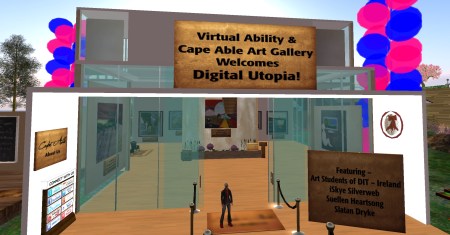
Digital Utopia: the show

May 17, 2017
Snapshot_022

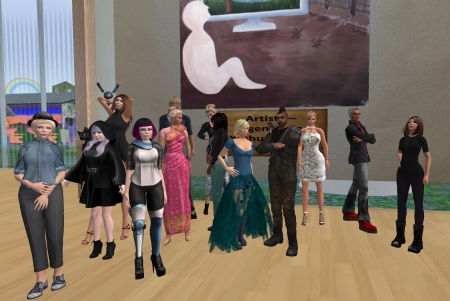
The class photo, with everyone in their finery!

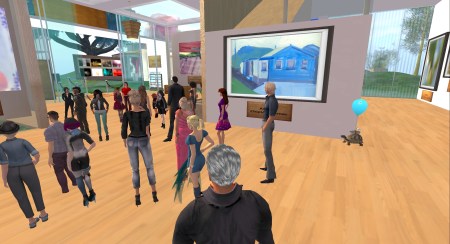
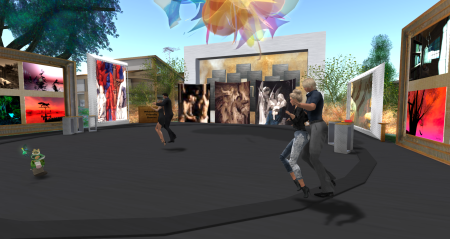
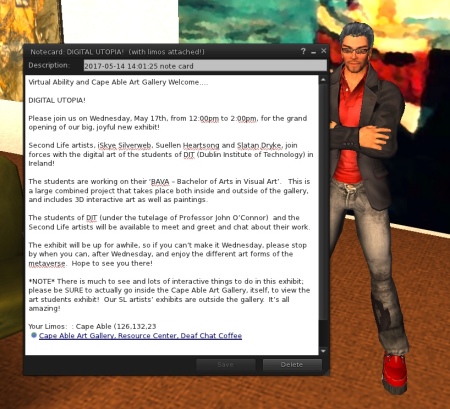
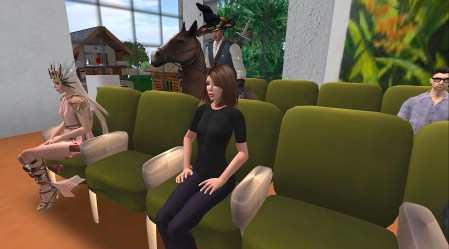
The joint show between DIT students and artists from Virtual Ability Island was a great success. There was so much work exhibited that it burst outside the gallery walls to the surrounding spaces. Turnout for the opening was also great with many friends from VAI coming along to see the work and party afterwards.

As part of their final assessment for the module the DIT student groups spoke about their collaborative artworks, introducing them to the assembled guests with confidence.

John and Glenn thanked you all for your enthusiastic engagement and hard work over the course of the semester. We also thanked Gentle Heron and everyone at Virtual Ability Island for their support.

Snapshot_012

Students presenting their work.

Snapshot_106

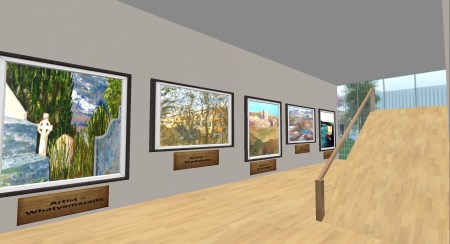
DIT individual student work is on show also. The exhibition continues throughout May.

Snapshot_110

Snapshot_107

Snapshot_104

Snapshot_103

Snapshot_102

33881505004_cd15b4d4c0_o

34561981132_f1da452590_o

34561980652_ce7a2e5e5d_o

The evening ended with a party and dancing.


h1

Digital Utopia!

May 16, 2017
show

Join us in Second Life (at 8.oo pm Irish Time) for the opening of this semester’s presentation of projects.

Snapshot_001

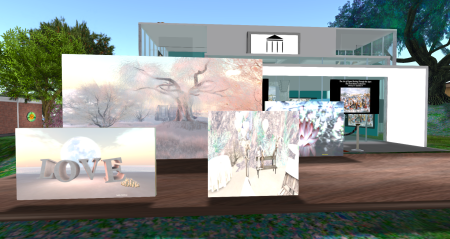
Cape Able Gallery.

h1

Class 12: Virtual identities

May 3, 2017

Sitearm Madonna visited DIT in Second Life this week to talk about the origin and development of his online persona. An engineer in the US oil industry in RL and manager of Virtual Dublin in SL Sitearm is glamorous female avatar who happens to be male in RL.

Snapshot_004

The glamorous Sitearm Madonna discusses the evolution of his avatar.

A resident of SL almost since its inception in the early 2000s Site elected to inhabit the virtual world in the form of a female avatar from the start. Attracted to the classical Greek myth of Artemis, goddess of the hunt, wild animals, childbirth and virginity but finding the name already proliferating in SL he settled on the anagram. He muses on this decision wondering how it might have been influenced by his working single mother’s life experience, or a simple curiosity. He soon discovered that not only was there a greater choice of clothing available for female avatars but, male associates were prone to bestowing gifts of jewellery.

In the early days of SL communication was via text chat – voice chat did not became available until late 2009 – so there was little to give away the fact that a female avatar might be directed by an RL male. It was only as Site became more engaged with the virtual world in RL, attending conferences and developing a consultancy practice for companies trying to move into SL that his identity became an issue. This led to some colleagues variously being surprised, irritated, embarrassed or unaffected by the revelation.

Snapshot_013

Sitearm, left, introduces one of his alternative avatars.

However, men using female avatars and women using male avatars turns out not to be unusual in SL. Women sometimes refer to unwelcome attention from male avatars as the reason for their choice and, indeed, Site also spoke of this. Locks Aichi also spoke of her decision to use a male avatar saying that she grew up as a tomboy and felt comfortable that way in SL having tried female and male avatars. She does have a female avatar in traditional Nigerian costume which she reserves for special occasions.

We also remembered a past student, Box of Chocolates, who photographed herself in RL with a cardboard box over her head and face, sporting hand drawn features, which then influenced her avatar for the semester.

Virtual worlds such as SL, and social media in general, allow us to explore our identities in new ways. This can be an interesting and revealing experience. In Asian Genders in Tourism Rokhshad Tavakoli reflects on how virtual tourism could be used to overcome barriers to travel for Iranian women. But, one needs to be mindful of the impact this may have on others. There are numerous examples of how it can go terribly wrong from the Syrian lesbian blogger who was revealed to be a married man in 2011 to the outing of a white woman who posed as a black civil rights leader in 2015. They were both seen as behaving fraudulently despite their own insistence that they were presenting an inner integrity.

Somehow, the discussion segued into the subject of robots and cyborgs with special reference to Donna Haraway’s seminal feminist text: A Cyborg Manifesto (1984) which challenges traditional theories of the performativity of gender, proposing the confusion of gender roles against the essentializing of them. For Haraway the Cyborg represents the space to move beyond binary codes into more a fluid and dynamic understanding of identity, she writes;

Cyborgs might consider more seriously the partial, fluid, sometimes aspect of sex and sexual embodiment. Gender might not be global identity after all, even if it has profound historical breadth and depth. (P.108)

Within this conversation Site told us about the Museum of Robots in SL and promptly his avatar become a yellow robot, reminiscent of Duchamp’s Nude Descending a Staircase, No 2.

6a00d8341bf74053ef00e54f0dfe6f8833-800wi

Tasrill Sieyes, an SL Resident who made Duchamp’s legendary painting come alive.

This constant merging and morphing of identities throughout the presentation was resonant with practices in the field of Queer Pedagogy which seeks to use pedagogical techniques to disturb and trouble the way social norms are constructed and affirmed through traditional educational frameworks. In Site’s performance, the ‘Dragging’ of identity expressed a creative space between socially assigned norms ie ‘Male/Female’, Drag being the in-between (/). Such performative pedagogies also subvert the traditional role of mastery assigned to the teacher in education, allowing for more constructivist horizontal approaches reminiscent of Joseph Jacotot’s radical conception of Universal Education discussed in the first session.

As an extension of this discussion and as a way to both engage with the ‘making’ potential of SL and to interrogate and question the formation of identity in SL, Glenn suggested we build a robot for our next project. However, given that this is the last class of the module before the exhibitions and presentations on the 17th May, this ambitious undertaking will have to be postponed until a future point.

This last class has really been the wildest of them all and certainly opened up new questions and new possibilities within Second life. The students have been on a creative and somewhat disconcerting pedagogical journey through this project, one which has been challenging and bonding in equal measure. It has broadened our understanding of what constitutes a world in the contemporary sense and how we might act in worlds that are still too new to be fully comprehended, but which might at the very least give us a glimpse of what is to come. Class ended with Site offering a guided shopping tour in SL. This was received with much interest and we closed a most interesting discussion.

h1

Class 11: The crit

April 26, 2017

The show of student art work this week was very successful. Each student exhibited one piece of art and, led by Glenn, presented it to the class; explaining the origin, inspiration, context and production.

Treasure Ballinger and her colleagues from Virtual Ability Island and Cape Able Gallery joined us and shared their responses to the work. The range of work was impressive, as was the relationship with the theme of the module this semester.

Snapshot_002

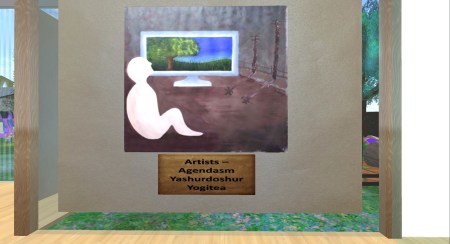
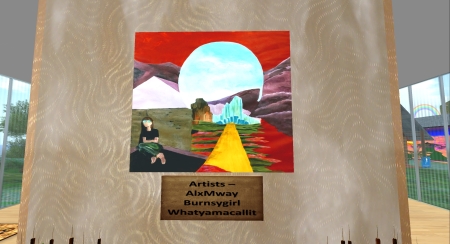
From left: AlxMway’s acrylic is a view of Schull from Sherkin through a keyhole; Yashurdoshur painted her reflection looking down on a still pool of water as a symbol of Utopia.

Snapshot_001

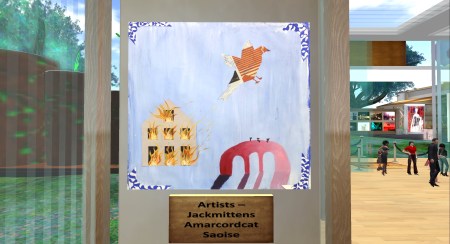
jackmittens’ painting of the archway within the walls of the Abbey on Sherkin Island – you are neither outside nor inside.

Snapshot_005

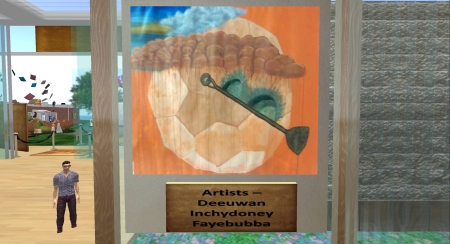
Fayebubba painted the Abbey from a photo – measured by points on the buildings.

Snapshot_013

Shadidame seems to be walking under Saoise’s fairytale bridge over a stream near her house. The fact that it seems like a road yet is a river gives it a heterotopic quality.

Snapshot_003

Unfortunately Inchydoney was having trouble with the internet connection and was logged out before she could present her intriguing painting.

Snapshot_016

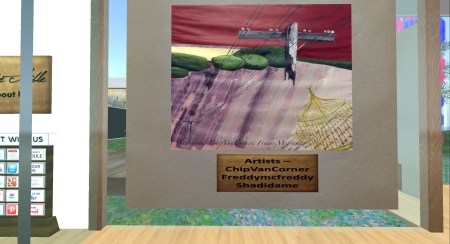
From left: ChipVanCorner’s painting of the community hall in Sherkin; whatyamacallit’s Mocollop graveyard in Co Waterford; Burnsygirl’s painting of the Abbey is a reminder of her great grandparents buried in a similar place.

Snapshot_007

Left: Shadidame’s heterotopian space of crisis and deviation – Retirement Home. Right: freddymcfreddy’s Boat.

Snapshot_020

freddymcfreddy was inspired by Foucault’s description of a boat being the ultimate heterotopia: a floating piece of space, a place without a place, that exists by itself, that is closed in on itself and at the same time is given over to the infinity of the sea.

Snapshot_006

Deeuwan’s acrylic of her garden, a heterotopic ‘other’ place for festivities apart from our home.

Glenn, John and Locks complimented you all on the show – it was very impressive that you were able to mount it so successfully. The work was a thoughtful response to the readings this semester and you all presented confidently. Well done!

Afterwards we all teleported to Cape Able Gallery where Suellen Heartsong’s SL photography show is on. Gentle Heron was there to greet us and Slatan Dryke razzed some of his moving photographs and dynamic sculpture on the lawn (see more on his website). iSkye Silverweb showed us one of her interactive sculptures, more of which can be seen at Ethnographpia in SL.

Snapshot_021

A moving airborne sculptural work by Slatan Dryke.

h1

Class 10: Teamwork

April 19, 2017

There was a healthy turnout for class this week, despite the Easter break. The issues affecting voice in SL appear to have been resolved, although some participants were still having difficulty.

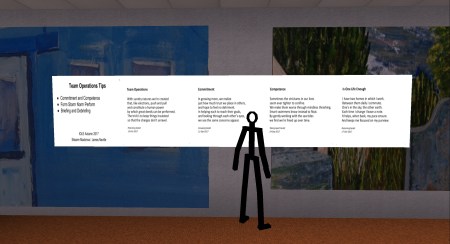
John explained that due to an unexpectedly busy period before Easter he had been unable to make arrangements for Sitearm Madonna to join the class this week. Site has frequently presented on teamwork, particularly in the online context. We will try to arrange a visit from him before the end of the semester. In the meantime, John presented the lecture on teamwork based on Site’s slides for Team Building Tips. If you missed the class review the slides and talk about the content with your team partners.

We had an interesting discussion based on our own experiences of team working. We compared that to the theory and put particular emphasis on the fluid nature of collaboration. The stages of team development are not necessarily linear and so teams can move between Forming, Storming, Norming and Performing and back again in almost any order. Similarly, the roles required for a successfully performing team may be taken on by different team members at times. The theory is useful to guide teams as it provides a structure but it must be seen as a useful guide rather than a rigid set of rules.

h1

Group project: Digital Skies

April 6, 2017

For this project you are required to create a single artwork as a member of a team – a large-scale group canvas. Each individual team member will research and generate their own images which will be combined by the team into a final composite image for exhibition in Cape Able Gallery. The exhibition will open in late May on a date to be announced.

Digital Skies

Digital Skies: Art and Utopian Thought

For the opening of the exhibition each group give a short talk to present their work, and discuss the experience of working in a team, virtually, collaboratively. This will be followed by a crit.

Each participant must also describe the progress of the project in a weekly blog post with particular emphasis on their contribution to the project. (What are you bringing to the group and how does it fit into the team’s work?) Discuss the details of the project and also the issues that arise in working collaboratively online. How easy is it meet up virtually and plan the project? What difficulties arise in development? How easy or difficult is communication? What particular problems arise and how do you deal with them? Focus on the experience rather than writing a ‘correct’ post or having an answer for every difficulty.

See page 6 Module assessment for assessment criteria applying to this project.

h1

Class 9: Assessment

April 5, 2017

Glenn and John took the class through the requirements for assessment, which is divided into two parts. Firstly, the group project and secondly, the individual blogs.

Firstly, each participant will be producing a series of digital paintings as part of their main module. For the SL module you will produce a large-scale group canvas (in the groups given in week 3). We are asking you to collaborate on a canvas to give you the experience of working on an online collaborative project. You will bring the finished canvas into SL for a group crit and exhibition.

The exhibition will take place in Cape Able Gallery on Virtual Ability Island in May (provisional dates are 17 or 24 May). A team from the class (burnsygirl, freddymcfreddy and whatyamacallit) will coordinate the exhibition with the curator of the gallery and will also invite residents of Virtual Ability Island to take part.  Part of your learning in this module is figuring out how to work virtually with people you have never met in RL.

Each group will give a short talk to present their work and discuss the experience of working in a team, virtually, collaboratively. This will be followed by a crit.

There will be a dry-run in DIT on 26 April. You will show your work in progress more to get a feel for exhibiting in SL than anything else. John suggested that you should review the module website to see how past student groups have presented their work.

Secondly, you will be assessed individually on your blogs. You need to ensure that you have made the five mandatory posts as described in the ‘Things to do before next class’ section of each class summary. Following that you should have at least five more posts describing your engagement in the group project.

Finally, 50% of the marks for this module go on the group project and 50% go on the individual blogs. For full details see page 6 module assessment.

h1

Class 7: Akron Island

March 22, 2017

The class visited the University of Akron island in Second Life this week. We were hosted by Prof Dudley Turner (aka Dudley Dreamscape) who took the module some years ago and then co-taught it with DIT for a number of years. Many of you also met Dudley at the seminar for National Digital Week in the West Cork Arts Centre last November. Unfortunately the problems with voice in SL have persisted so the class was conducted in nearby chat text.

Dudley described the origin of the island. When it was planned the faculty wanted to make sure there were a variety of areas for small group gatherings. These are scattered around the island. Originally there weren’t any big classroom spaces but Dudley built the larger lecture hall type space for larger meetings as the requirement grew. The learning spaces include a tree house and a glen with its own waterfall. Glenn noted that the rural design was reminiscent of the hedge schools that sprang up around Ireland under the Penal Laws.

Akron

Akron Island with the life-size pie chart maker in the foreground.

We moved to the life-sized pie chart maker for a discussion on virtual identity. As we were forced to chat through text this was a useful to device to encourage debate. The facilitator (me, in this case) asks a question. Participant avatars then move to the appropriate section: Strongly Agree, Agree, Neutral, Disagree, Strongly Disagree and a pic chart is built in the centre. We worked with the following questions:

  1. Do you think you share too much online?
  2. Do you know who is watching you online?
  3. I would be happier not to have social media apps
  4. I keep my business and personal stuff separate online.

The second question resulted in discussion around free apps and the ‘price’ we may unwittingly pay. Chip Van reminded us that if it is free we are the product. In response to John’s question if people feel in control of their online information Inchydoney suggested we tend to throw caution to the wind for the sake of convenience. However, there was an acknowledgement that different age groups are behaving in different ways online.

The discussion around social apps resulted in many comments about ‘addiction’ to the buzz from them. Yet everyone agreed they were useful for keeping in touch when physical distance is an issue. Once people have met in RL the online engagement can be more satisfactory.

The class meeting finished with thanks to Dudley for hosting us at Akron Island and an invitation for him to join us in Dublin anytime.