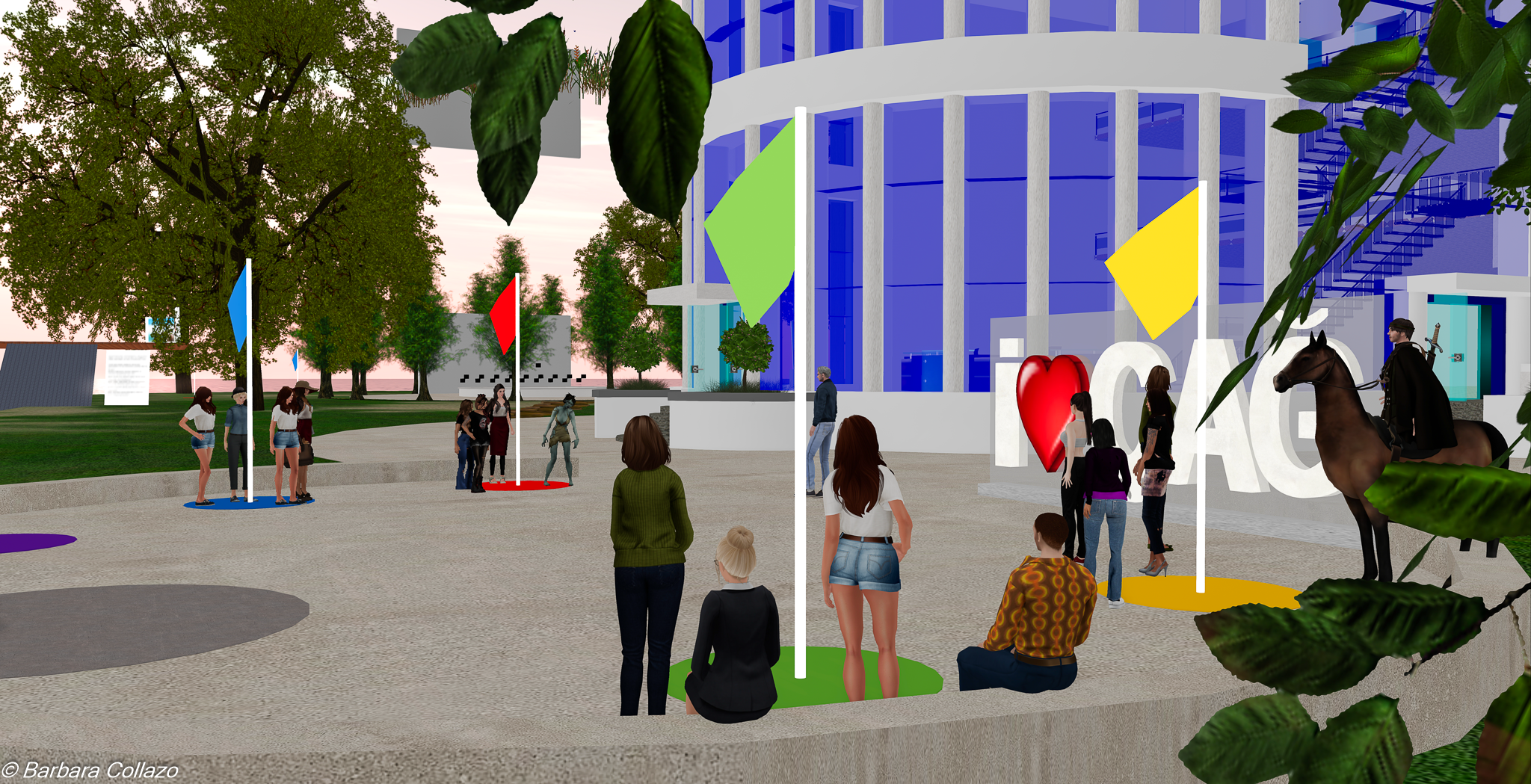
Project Teams gather at the Çağ University campus as class commences. Photo Barbara Collazo
Sitearm Madonna joined us at the Çağ University campus for today’s class on Teamwork and Collaboration. Here is a recording of Sitearm’s presentation:
Following the presentation we did a quick check-in with each team to answer the following questions: 1. Has your team held its first meeting? 2. Who is your Team lead and assistant lead? 3. How will your team communicate outside SL? 4. Did you discuss the brief for the Team Project?
All teams answered positively and have given some thought to the project and how they will address it.
Sitearm Madonna presents on the theory of team development and operation. Photo Barbara Collazo
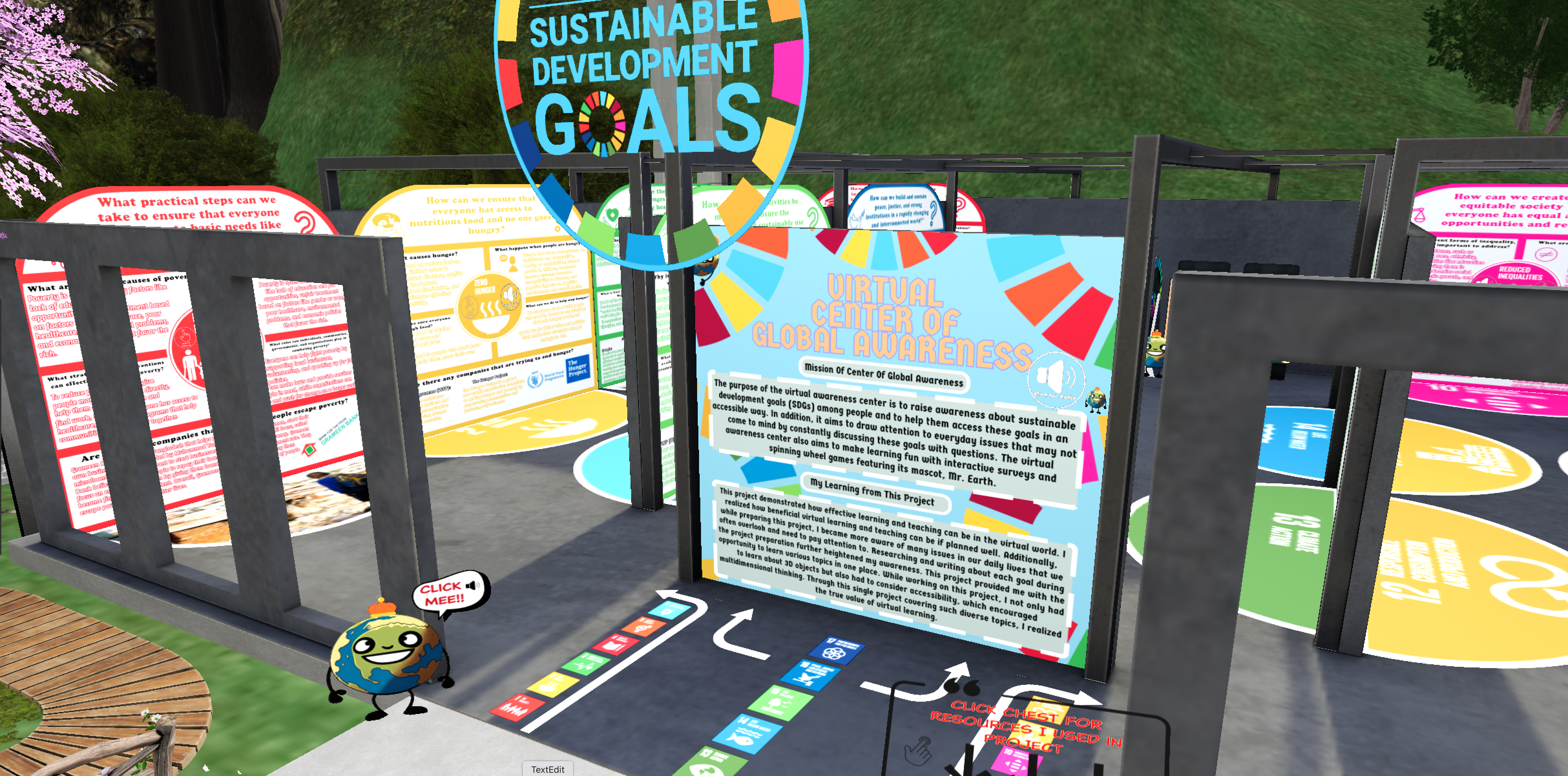
Finally, we paid a quick visit to a build by one of last year’s Turkish students, Ovcel, demonstrating the United Nations 17 Sustainable Development Goals.
The United Nations Sustainable Development Goals are a universal call to action in the face of global poverty and the impact of climate change on our planet. Seventeen goals were agreed by all member states in 2015 as part of the 2030 Agenda for sustainable Development. We have nine years left to achieve success and secure the future of humanity on Earth.
The United Nations call follows a Warning to Humanity issued by the Union of Concerned Scientists as long ago as 1992. They ‘feared that humanity was pushing Earth’s ecosystems beyond their capacities to support the web of life’. Five years ago the warning was updated as 15,000 scientists from around the world published World Scientists’ Warning to Humanity: A Second Notice.
Virtual reality (VR) has been in development since the last century but the coronavirus pandemic with its attendant public lockdowns and social distancing has resulted in a rapid growth in virtual engagement as reported in Forbes Magazine and in Newsweek recently. This, in turn, has led to significant development in the supporting technology.
Second Life was one of the first and remains one of the most successful platforms in the social and community development arena that also has significant educational and academic engagement. As an immersive environment with a functioning economy, creative building tools and a large active population it appears to be a self-sustaining world. According to the online magazine, Mic, residents have ‘full Second Life lives, filled with many of the same hobbies and activities one might enjoy in their first life’.
The platform is particularly relevant for online collaboration because it supports persistent chat, offline email, text chat, voice chat, group versus subgroup chat isolation, virtual to real world currency exchange (a precursor to bitcoin), inworld collaborative three dimensional build, three dimensional avatar self representation and interaction, and three dimensional environment immersion.
Second Life can be seen as a mirror to the real world, or an extension of the world. Does this virtual environment have a responsibility to also mirror the demand for sustainable development?
Assuming the answer is a resounding ‘Yes!’ the question becomes: how does Second Life measure up in terms of sustainability and responsible practices?
The Brief
Your task is to examine this question in the context of the UN Goals and report on the platform itself, the communities that it supports and the activities of the residents. Identify good practices and shortcomings; recommend possible improvements in operation; and present your conclusions. In researching this project draw on examples from your own culture, or the culture in which you are now residing. Compare this to what you observe in Second Life.
In short, your presentation should answer the question:
How does Second Life measure up in terms of sustainability and responsible practices ?
You will be assigned to a team to work on the project. Each team will be assigned one of the following three key topics: Economy, Society, or Environment and you will attempt to answer the question in the context of the sub topics listed for each theme below.
During the final class, at the end of the semester, each team will make a presentation in an entertaining, informative and lively manner, live in Second Life. The presentation should be no shorter than five minutes and no longer than ten minutes. You are encouraged to use visual, audio or any other aids to support the presentation during which each member of the team must take part.
Here are the three key topics, with the sub themes for each:
Economy
Society
Environment
All teams will also address the following sub topics:
Deliverables
Participation in the rehearsal of presentations.
Participation in the presentation of your Team Project.
Following the Team Project presentations write the sixth section of your essay reflecting on your contribution to the presentation, the reaction from the audience and the overall success (or otherwise) of your group work.
Assessment Criteria
It is important that you read and understand the Assessment Rubric (you will receive a copy from your lecturer in class) given for this assignment so that you understand the basis on which the assessment will be made. There are 6 assessment criteria in total. Each member of your group will receive the same mark for the first 2 criteria, For the other 4 criteria you will receive an individual mark.
Group Mark:
Communication with the audience: establishing a connection with the audience to deliver a coherent presentation.
Content: addressing the theme of the brief coherently.
Individual Mark:
Tools for Collaboration: selection of appropriate tools for group planning and effective use of the tools.
Teamwork: contribution to the team and demonstration of understanding of team dynamics.
6th section of your essay: ability to describe activity coherently, reflect on experience and present a critical evaluation of the process of developing the project, citing appropriate references.
Quality of Presentation: individual contribution to the presentation of the project.
The Project Team presentations for the VWEC Student Challenge were recorded on the final day of class this semester and this formed part of their submissions. The presentations were well delivered with participants making a strong showing. The collaboration between Turkish and Irish students was excellent. All video recordings are courtesy of Sitearm Madonna.
The Purple Team:
The Yellow Team:
The Red Team:
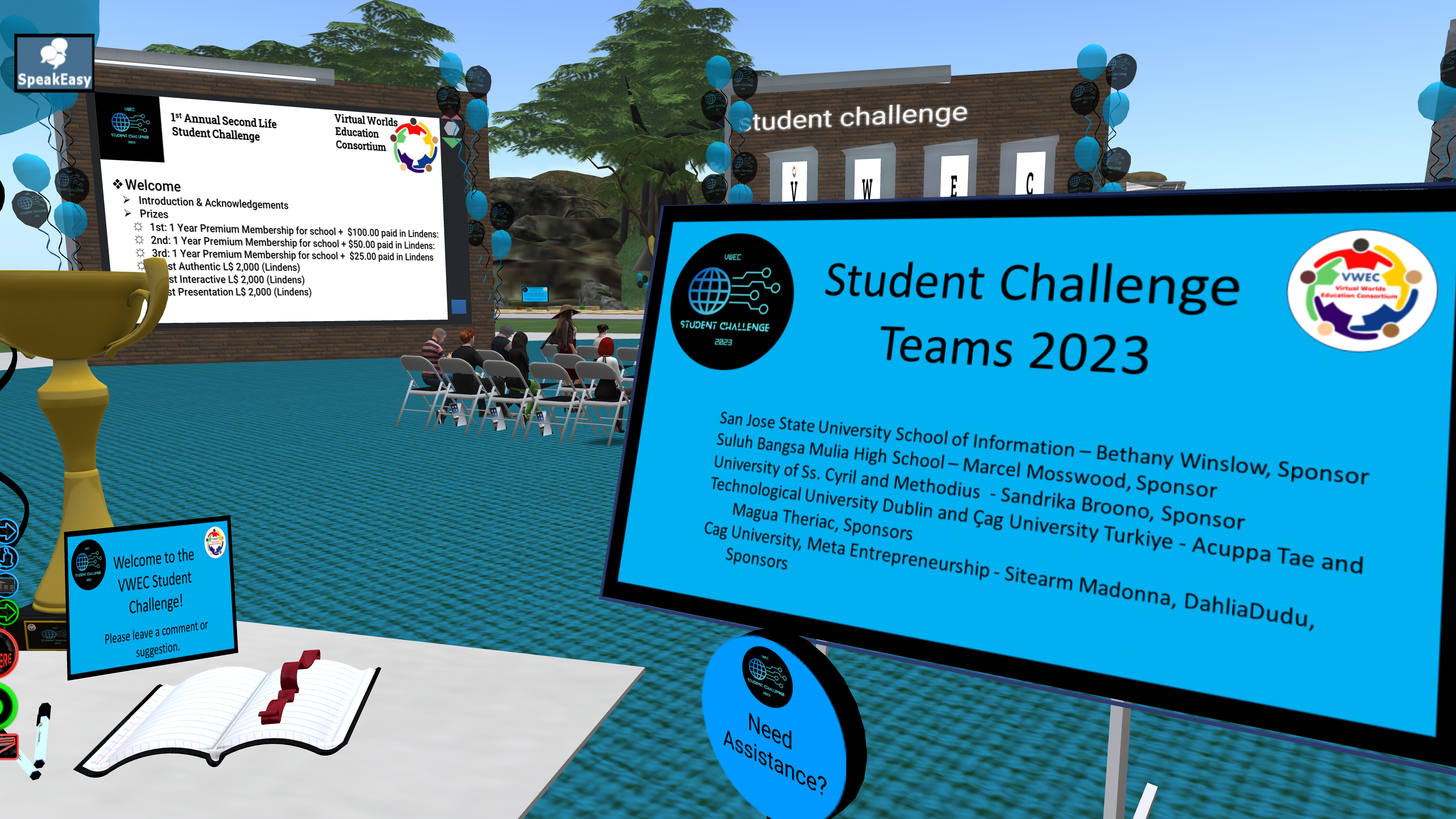
At the presentation of awards for the VWEC Student Challenge. Photo Acuppa Tae
Each of the four student groups presented their final Team Projects in the final class of the semester. The work was excellent and very well presented. Each of the students spoke during their team’s presentation and everything went off without a hitch. Many of the guest speakers during the semester were in the audience, along with many others who have an interest in online and virtual education.
Video courtesy of Sitearm Madonna.
Francisco Koohaven from Whole Brain Health made a video of the Student builds supporting their presentations. This video fly-through of each project shows the amount of thought and effort the students put into the supporting work for their presentations.
The practice run for the Team Project was led-out by Sitearm Madonna who put the student teams through their paces. The exercise provided an excellent opportunity to identify exactly what had been achieved by the teams so far and what yet needed to be done. Sitearm also recorded the class for later review.
Next week is a public holiday in Ireland so there won’t be a formal class. The final presentation of the students’ Team Projects will be hosted by Whole Brain Health the following week, 8th May 2023.
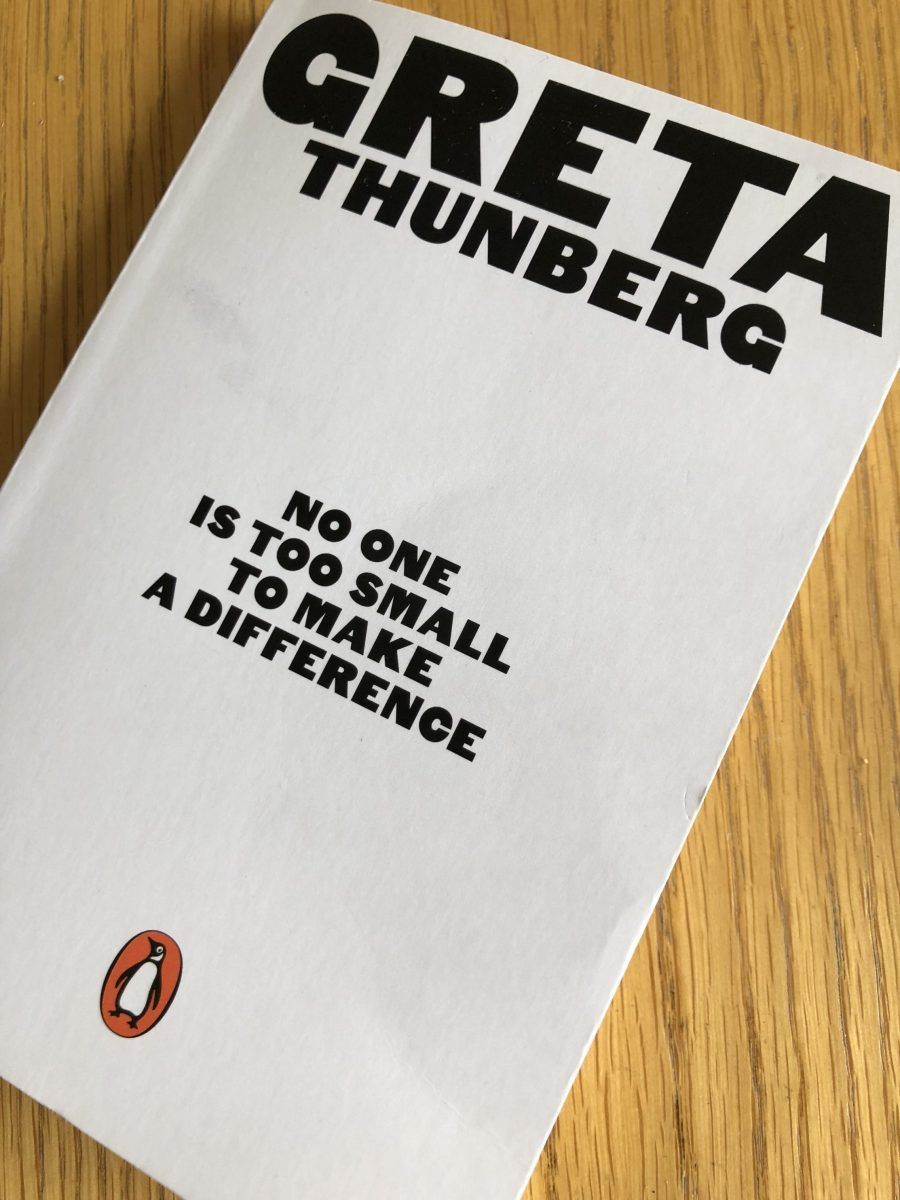
This is the brief for this semester’s Team Project – ‘No One is too Small to Make a Difference’.
Photograph by John O’Connor.
The United Nations Sustainable Development Goals are a universal call to action in the face of global poverty and the impact of climate change on our planet. Seventeen goals were agreed by all member states in 2015 as part of the 2030 Agenda for sustainable Development. We have seven years left to achieve success and secure the future of humanity on Earth.
French philosopher Bernard Stiegler suggests that the excesses of the consumerist model are responsible for driving the world rapidly towards a dead end. Speaking in London at the Work Marathon event in 2018 he argued that a radically new approach to shaping our society is required. Rather than allowing capital and technology to dictate we need to bring epistemological, technological, artistic, judicial, social and economic questions together in order to shape the future.
This calls for a rethink of our way of life are growing more persistent as evidenced by activists such as Oğuz Ergen from Türkiye and Greta Thunberg from Sweden.
Thunberg, speaking at Davos in 2019 said ‘our house is on fire’ and implored world leaders to extinguish the fire before it gets out of control. Later that year she published her talks in a little book titled No One is Too Small to Make a Difference. If one small Swedish schoolgirl can make a difference in the world then it follows that we can all do so.
What difference can you make?
The Brief
Meet in your teams and discuss this text. Read the referenced texts and look at the videos to inform and expand your understanding. Find additional sources to deepen your knowledge and share these with your team members.
· Discuss your response to the issues.
· How does this make you feel?
· What might you be able to do about it?
Develop your ideas into a collective response and design an action plan in response to the crisis. Decide what you can do individually in your families, local communities or university. Agree on a joint approach and select a single action or a change that you think will lead to a specific outcome.
Develop a strategy to achieve your goal and an approach to communicating it to others in your community so they will join you in achieving greater success.
Submission
Build an installation in Second Life that explains your project to visitors and devise a guided tour that you will give to residents encouraging them to do something similar. Each team member should have a specific role in the tour.
Write a reflective review of the team project and how it progressed. Refer to team building theory and describe how it played out in your experience of the project. In particular, describe your own contribution to the project and to the team.
The students presented their collaborative Team Projects this week. The quality of the content and the presentations was excellent and the support they received from the Whole Brain Health team was much in evidence.
Sitearm Madonna recorded the students’ presentations and also completed the post production work to shape the result, for which we are most grateful.
Thanks are also due to Andrew Sullivan at Montana State University Billings, who provided the Heavy Industry student presentation region for the evening.
Finally, in addition to welcoming our module guest speakers and friends, it was a great pleasure to have members of the Virtual Worlds Education Round Table join us.
Congratulations are due to the students for the excellent quality of their projects, both in terms of content, research and presentation.







 Virtual Environments: Is one life enough?