h1

Class 11: Penultimate

May 12, 2016

Snapshot_002

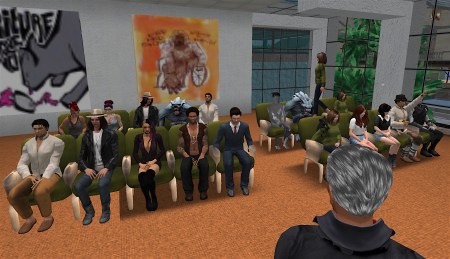
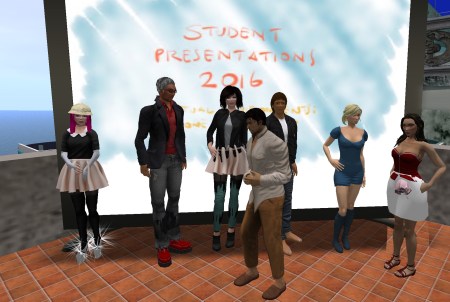
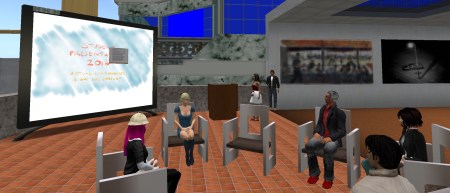
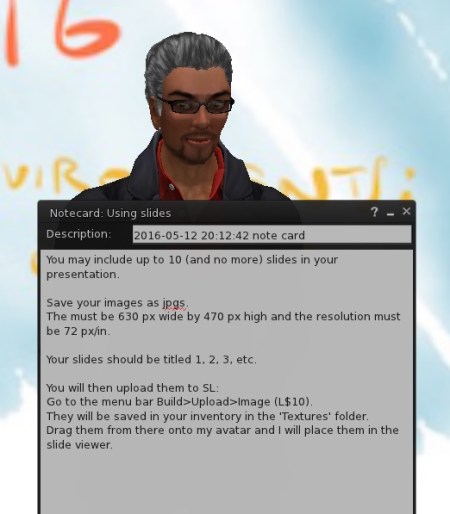
The final class before students present their group project work next week agreed to a slightly later start time of 8.30 pm on May 19th. John gave students a notecard with details of how to prepare slides for the presentation.

Untitled copy

If you have any questions about the project please post them to the Facebook group and John will endeavour to answer as soon as possible.

Remember that the blogs will be due for assessment next week also. Make sure you complete all the required posts and follow the guidelines and feedback you have been given throughout the module. The deadline for completing your blog is midnight Friday 20th May – they will be assessed sometime after that.

THINGS TO DO BEFORE THE NEXT CLASS:

  1. Read: 5 Steps to Build a Productive and Tight Knit Remote Team.
  2. Write the tenth post: to your blog after you have made your presentation next week. Describe how you think the presentation succeeded and where it could have been better. Comment on what you learnt about online collaborative working.
h1

Class 10: Project review

May 5, 2016

Class started with a discussion about the feedback on student blogs. We had some clarification on what ‘writing more reflectively and critically’ means. Earlier this month John suggested you read the advice given to a previous class: Blog posts and group work. If you haven’t already read it you should do so now.

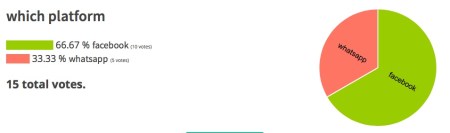
John asked each group to provide an update on how the group project work is progressing. It seems that it hasn’t really gotten going properly yet. Nobody took the opportunity to meet in Second Life during last week’s class time. Some participants have been discussing the project in Facebook and both groups are planning to meet over the weekend to begin work. Following a discussion about the topic of the project where it became clear that students had not really considered the scope of the project John suggested that an extension of the presentation date by a week (from 12 May to 19 May) might be a good idea – it is justified on the basis that last week’s class was cancelled. It was agreed that students will post to Facebook on Monday giving their preference regarding the presentation date.

John also proposed that the presentations be delivered where we meet for class using the slide viewer there. Each group can use up to 10 slides in its presentation.

There was a general discussion on the topic of the project: what our workplaces are likely to look like in 2050. Using McLuhan’s suggestion that we consider how technology influences behaviour we pondered growth of online and virtual systems. History is always a good jumping off point. Would anyone in pre-industrial Europe have expected industrialisation to result in unemployment? It would probably have been inconceivable to people who starved if they didn’t work. The expectation that replacing workers with machines would lead to a golden age of leisure for all did not come to pass either. How likely is it that people will still be going to offices and factories for work by 2050? These questions should form the start of the project brainstorming exercise. Teams are expected to be asking the right questions rather than producing the right answers. Use the readings set throughout the module to inform your thinking and make sure you refer to it in your presentation.

John also reminded you of the importance of reflecting on your teamwork in the context of the talk on team work last month and writing up your thoughts in your blog.

THINGS TO DO BEFORE THE NEXT CLASS:

  1. Meet: in your groups to plan your approach to the project, decide on what aspect of the project you will explore, identify the individual tasks and prepare an outline schedule (this work was to have been done for today’s class but wasn’t).
  2. Write the ninth post: to your blog describing how your team considered the Form-Storm-Norm-Perform aspects of team work and how you addressed the various team roles.
h1

Class 9: Team work

April 21, 2016

lecture_001

For online collaboration to lead to successful outcomes it is useful to have an understanding of how teams function. We considered the under-lying factors that influence groups and teams in real life and discussed how they might apply in the online environment. Then we examined the various roles different members of the team might play over the life-cycle of a project. You can review Sitearm Madonna’s tips and tools for online virtual collaboration and team working.

John reminded everyone of the importance of reading the project brief carefully and also paying particular attention to the assessment criteria. There is no value in working hard on something that is not required – ensure your focus is sharp and your effort is actually contributing to the required outcome. You should re-read both the brief and the assessment criteria regularly throughout the project to ensure you remain on target.

From here on your blog posts will concentrate on the development of your team and the project, referring to the principles and guidelines outlined in the class. Reflect on how these play out in reality as you work together – describe what works well for you and also the difficulties and problems you encounter and how you resolve them. Pay particular attention to  what you are learning, noting how you might do things more efficiently and effectively in any future team work. Ensure you document your contribution to the project.

As there is no formal class next week John advised that you use the time to meet in your groups in SL and get a good start to the project. You all know how difficult it can be to arrange a suitable time to meet outside of class (everyone has lots of commitments) so use this opportunity to kick start your project and settle on a working methodology that suits the members of your team. John will arrange an alternative class time through now the Facebook group.

THINGS TO DO BEFORE THE NEXT CLASS:

  1. Meet: in your groups to plan your approach to the project, decide on what aspect of the project you will explore, identify the individual tasks and prepare an outline schedule that will see you ready to present your work on May 12th.
  2. Write the eighth post: to your blog describing this meeting, your contribution and your team plan.
h1

Class 8: Project briefing

April 14, 2016

John gave a detailed briefing on the group project explaining how it should be approached and delivered. The key deliverable is a ten minute presentation but the purpose of the project is to give you a chance to experience working collaboratively online: including the difficulty of arranging to meet; the challenge of holding useful discussion; dividing the workload and so on.

While this aspect of the experience must be presented as part of the final project you are also asked to reflect on the weekly experience in your blog from now on. This will ensure that you receive a fair assessment of your contribution and will not be let down if team mates do not deliver as expected. You will be assessed on your contribution to the project, not simply the overall success of the final presentation.

The presentation in the final class should be delivered vocally (if anyone has problems with their voice in SL let me know) but should have a text backup using notecards. Second Life has a rich set of tools for including images, sound, movies and animation to support your talk. John demonstrated the most simple way of showing images by dragging them from your inventory to a ‘screen’ made from a simple panel. You can practice this in any number of public sandboxes located around SL.

THINGS TO DO BEFORE THE NEXT CLASS:

  1. Write the seventh post: to your blog describing how your group might meet online regularly to develop the project. Discuss the different platforms available, their pros and cons for this work; and how comfortable you think you would be with them.
  2. Meet with your team: to begin discussing your response to the project brief.
h1

Class 7: Medium and message

April 7, 2016

We began the class by talking about the feedback John gave on the student blogs. He reminded everyone of the importance of writing all of the required posts so you should check that you have done that now: everyone should have at least six posts written – as described in the ‘things to do before the next class’ section of all class summaries (note that the next assessment point for the blog will be following next week’s class). You might like to read advice on blog writing from Prof Dreamscape to students on this module in 2014.

Following that we had a discussion based on the the reading material provided on Marshall McLuhan and Axel Bruns. Not everyone had read the papers so we took five minutes out to do so before continuing. We looked in particular at the impact of social media apps and how they might be influencing how people interact. This was compared with older communications technology such as the land-line telephone. Using both text and voice a lively discussion ensued with everyone sharing their views.

THINGS TO DO BEFORE THE NEXT CLASS:

  1. Ensure your blog is up to date with six posts written and your bio clearly visible (the bio may relate to your avatar – in other words it may be fictional or aspirational).
  2. Read the group project brief 21st Century workplace and be prepared to interrogate it during the next class.
h1

Class 6: Making content

March 10, 2016

A very small class (only two participants) made discussion a little thinner than usual but Stinkylink and Rebeccahellohowru contributed valiantly to ensure a lively(ish) session, which Dudley Dreamscape joined later.

The task of buying clothing and trying to dress your avatars proved less easy than anticipated. Some ended up shirtless with floating objects they were unable to remove, or wearing unexpected items of clothing. However, engaging with the economy of SL gave an insight into the level of engagement by residents. Nevertheless, I get a strong sense that the participants this semester are somewhat bemused by SL and cannot really understand why anybody would choose to spend time in-world by choice. One participant described SL as a chatroom with pictures. I have frequently used the same descriptor and assumed the pictures were a useful addition to communication but, the question now seems to be: do the pictures serve any useful purpose? After all, the visual quality of SL has not seen a step change since its inception in the early 2000s. It remains cartoonish and very crude when compared with similar online worlds created for gaming (World of Warcraft, Call of Duty etc). The most significant issue may well prove to be the mediation by an avatar. Until we can insert ourselves directly into the virtual world the sense of distance may continue to be off-putting to the average person.

using-smartphone

Also, it seems that the plethora of communication media such as WhatsApp, Whisper, Yik Yak, Instagram, Tinder and Snapchat that facilitate text, pic and video sharing are becoming integral to social engagement. Online and virtual tools are no longer used primarily to bridge geographic distance but are part of normal everyday interaction. Many of these apps are marketed on the premise of impermanence – claiming that the content is deleted or disappears within a certain timeframe. While this replicates real life conversation giving a sense of anonymity and safety to the user it should be treated with caution.

We also discussed how participants are getting on with their blogs and I gave feedback on the week four assessment reminding you to ensure you are up to date with your posts. The next assessment point is after week eight so you have time to catch up if necessary. This led to a discussion about content creation informed by Axel Bruns’ lecture From Prosumer to Produser that was set for viewing last week. If you missed the class and have not read it please do so before the next class.

Finally, the brief for the group project has been posted to the blog. Please read it and if you have any questions post them to the Facebook group discussion and I will do my best to respond as soon as possible.

THINGS TO DO BEFORE THE NEXT CLASS:

  1. Read: What is the Meaning of the Medium is the Message? by Mark Lederman.
  2. Write the sixth post: to your blog reflecting on your own use of online social media.
h1

Group project: 21st Century workplace

March 10, 2016

future workplace

The project is to predict and describe the workplace in 2050. You will need to imagine how you will be working by the middle of the 21st Century. Will people still gather in physical offices or is it more likely that we will stay at home and work online? How will technological developments influence the way in which we work? What kinds of jobs will still need people to meet in a physical location?

Each team will be required to describe an imagined workplace in 2050 in a ten minute presentation in SL. The presentation should be supported with visuals as appropriate and each team member must present part of the project.

The presentation should also discuss the experience of the team members working collaboratively online. Describe the issues that arose during the preparation of the presentation: how easy it was to meet up online? what difficulties arose around clear communication and arriving at agreement? how did you plan? how did you resolve problems?

See page 6 Module assessment for assessment criteria applying to this project.

Project presentations will be made on Thursday 12th May 2016 at 8.00 pm.

h1

Class 5: Personal branding

March 3, 2016

There was a smaller class group this week so, after waiting for the others to turn up we started a discussion on the assignment completed during the week. All of you visited clubs in SL and discovered the peculiarity of DJs, performers and the joy of dancing in this environment. You also discovered that communities form around such regular events, much as they do in real life. Also, as in real life, it may not always be easy to get access to the community – people may not be willing to engage with newbies. We will return to a discussion about communities in a later class. Some of you were unable to animate your avatar to get it to dance and those who did were unable to stop dancing! John gave everyone an object that stops animations by dragging it onto your avatar – a handy device to keep in your inventory.

Snapshot_001

We decided to visit the Bauhaus Museum in SL for the second part of the class. It is a recreation of the famous early 20th Century school in Weimar Germany presenting information about the staff and students along with an exhibition of Bauhaus work and Bauhaus-inspired work. The spacious venue is also ideal for hosting an impromptu discussion. Although there were other visitors viewing the work it was possible to sit comfortably and discuss the reading material on personal branding.

John reminded the class that the first assessment of the blogs will take place sometime after 12 midnight on Sunday 6th March, so ensure your blog posts are all up to date before the end of the weekend.

John also dispersed cash in the form of L$. Each student received L$300 to facilitate their interaction with the SL economy. Despite the appearance of immense generosity on his part John explained that the exchange value is somewhere in and about US$1. No opportunity to get carried away, therefore. You should also be aware that there is plenty of free stuff available around SL if you go searching. Try experimenting with clothing: how to change outfits (you will find a wardrobe in your inventory folder); accessories such as jewellery and watches; objects such as mugs and glasses, tools etc. You need to spend some time playing in SL so that you get a sense of the possibilities.

THINGS TO DO BEFORE THE NEXT CLASS:

  1. Visit: shops in SL and make a purchase using the L$ given to you in the class.
  2. Write the fifth post: to your blog describing your experience of the consumer economy in SL.  
  3. Lecture: From Prosumer to Produser: Understanding User-Led Content Creation by Prof Axel Bruns (Creative Industries Faculty at Queensland Institute of Technology) explains his theory of user-led collaborative content creation.
h1

Class 4: Who are you?

February 25, 2016

The class discussed the notion of online identity this week. We started by sharing experiences of trying to meet new people in SL. This proved interesting in many ways. Approaching complete strangers was simultaneously easier and harder than doing so in real life! Harder because participants were new to it and found it took courage and determination to introduce yourselves and begin a conversation. Easier because you were aware that all residents of SL had made a conscious decision to be here and therefore were signifying their willingness to engage with others. The comparison was made with joining a club or going to an entertainment venue where everyone acknowledges that they are in attendance for social interaction.

Snapshot_002

Meeting new people in Second Life is both hard and easy!

There were some surprises at the direction conversations occasionally took. Participants discovered a slightly darker side of  the online world that offered ‘adult entertainment’. Just as in the real world, it is possible to encounter unsavoury characters and it is important to be aware of this side of online environments. However, unlike the real world it is easier to escape from an unpleasant experience by teleporting elsewhere or simply logging off.

Many of you suggested that SL offered the opportunity to present yourself in a new way – to experiment with the presence you offered online. Many residents present as animals or imaginary characters such as vampires or zombies. Even more ambiguous is the knowledge that we don’t really know who we are engaging with in an online environment. The cues we rely on in the real world are not available online. John suggested that this ambiguity also permeates notions of the ‘truth’. He gave the example of the Gay Girl in Damascus blog that received international attention when the supposedly lesbian author was revealed as an American male postgraduate student in 2011. The author claimed he was creating a voice for issues he felt strongly about but the public reaction to being hoaxed was less forgiving. John also mentioned last year’s controversy surrounding the white civil rights leader who passed herself off as black for years. One of the surprises in the Rachel Dolezal case is the amount of support she received after the truth was revealed. If people can be race-fluid or gender-fluid in real life it is unsurprising that they can present convincingly in SL.

THINGS TO DO BEFORE THE NEXT CLASS:

  1. Visit: a music or dance club in SL while it is active with other residents and soak up the ambience of online entertainment.
  2. Write the fouth post: to your blog describing your experience of social interaction in SL.  
  3. Read: The Lazy Person’s Guide to Personal Branding by Yohana Desta at Mashable  or Personal Branding Basics by Chris Brogan, expert in online community, social media, and related technologies  or The first Step to Building Your Personal Brand

h1

Class 3: Exploring SL

February 18, 2016

This week saw better attendance than last week and all participants shared links to their blogs. John will review them and post comments (where possible, tumblr and blogger don’t seem to allow this). There was a discussion about the best way to communicate which led to the setting up of a Facebook group for the class. This will be the main method of communication outside of SL.

We got reports from everyone about their experiences exploring Second Life. The reaction was mixed with the exercise throwing up some of the difficulties interacting with the virtual world and its residents. We will talk about interacting with other avatars next week, when everyone will have had an opportunity to try it out!

Not everyone had read the assigned text so John reminded the class of the importance of doing so. If not, we will break off to read it during class and then run on late. It is necessary to have read the text so that an informed discussion can be had. We did go on to talk about how virtual teams might work. Everyone joined in and gave examples from their own experience. The general view is that it is more difficult to build and maintain teams that do not meet in real life. John suggested that participants keep an eye on this aspect of their experience over the semester and review their opinions at the end to see if they have changed in any way.

Because of attendance a slight rearrangement of groups will be needed. John will post the updated group members to the Facebook group.

THINGS TO DO BEFORE THE NEXT CLASS:

  1. Explore: SL and find at least two different strangers to talk to. Find out what you can about their second life; what they do in SL; why they spend time here; what interests they have; and so on. Remember that in SL there is no need to be shy – it is not unusual to approach other residents and start a conversation.
  2. Write the third post: on your blog describing your encounters.
  3. Read: The truth doesn’t seem to matter very much in UCD revenge porn saga an opinion piece in The Irish Times that reveals the fear and uncertainty surrounding online engagement.