
Walking away…?
We are reading the short story The Ones Who Walk Away from Omelas by Ursula K. Le Guin for this class. Published in 1973, the story is an allegory in which the author invites us to explore what it means to be a member of society, a citizen. What responsibilities does citizenship impose on us? What is the difference between our personal, social, and professional responsibilities?
The societies in which we live provide us with many benefits, opportunities, and privileges. We accept these, often without even being aware of them. We rarely question our good fortune, having come to regard it as normal. But what happens when we discover that our comfort or prosperity comes at a cost to others? Does benefiting from injustice make us responsible for it, even when we have played no direct part in causing it?
When confronted with the suffering of others, people respond differently. Some accept the status quo. Some are troubled for a while but eventually manage to forget. Others, unwilling or unable to accept the situation, choose to walk away.
Are these the only options? Might there be other approaches? And is walking away an act of moral courage, or a failure to take responsibility?
Preparation for this class
Please read the text (approx 13 minutes).
This must be completed before class where we will be discussing the following questions:
- How might this story be relevant to us today?
- What benefits do we derive from society, and what responsibilities do we have in return?
- What might your response be if confronted with the secret of Omelas?
Essential Reading
Le Guin, U.K. (2015). The Ones Who Walk Away From Omelas. In The Wind’s Twelve Quarters. (pp. 254-262). London: Gollancz. (Original work published 1973).
Additional Reading
Response to Ursula K. Le Guin’s 1973 short story ‘The One’s Who Walk Away From Omelas’ by Mook Wheeler.
Presented to students on the Dublin Institute of Technology BA in Visual Art as part of the module Virtual Environments: Is one life enough? Wednesday 8 March 2017.
Conclusion
The narrator of the story presents a stark choice: remain in the city and enjoy the privilege it offers knowing the cost is paid by the child in the cellar; or walk away. Are there other choices not offered in the narrative? What choice do we make in our daily lives?
These questions are one’s you will confront throughout your life. To be a citizen, a member of a community, a profession, requires active participation. You will need to develop an ethical code to guide your decisions and behaviour.
Ursula K. Le Guin
.
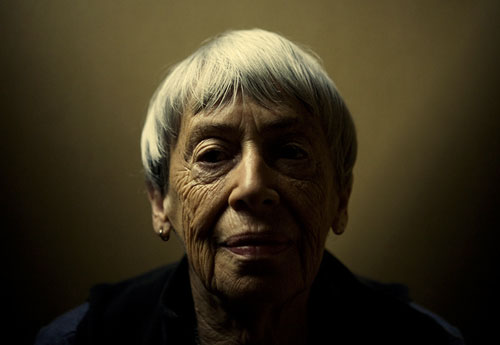
Ursula K. Le Guin (1929–2018) was an acclaimed American novelist, poet, and essayist, best known for her works of science fiction and fantasy. Her writing explores themes of identity, morality, power, social justice, and the relationship between individuals and society.
Among her best-known works are A Wizard of Earthsea (1968), The Left Hand of Darkness (1969), and The Dispossessed (1974). Her celebrated short story The Ones Who Walk Away from Omelas (1973) raises profound questions about morality, collective responsibility, and the ethical cost of human happiness.
Le Guin received numerous literary honours and is widely regarded as one of the most influential writers of speculative fiction of the twentieth century.
Speaker – Acuppa Tae
Acuppa Tae is John O’Connor in the Natural World.

